

Last Updated: November 10, 2026
Quick Summary
To maintain a vinyl pool liner, keep the water chemistry balanced, clean the liner gently, and inspect for early damage. Test water twice a week, wipe the waterline often, and use only cleaners and tools labeled safe for vinyl.
- Target pH between 7.2 and 7.6 to protect the liner from wear.
- Keep total alkalinity at 80 to 120 ppm and calcium hardness at 200 to 400 ppm.
- Add one chemical at a time, run the pump, and retest before adding more.
- Use soft-bristled brushes and avoid wire brushes, abrasive pads, and pressure washers.
- Identify the stain type before treating it, and work from gentle to strong methods.
Table of Contents
- How Vinyl Pool Liner Maintenance Works and Why It Matters
- Step 1: Balance Your Pool Water Chemistry
- Step 2: Clean the Liner Above the Water Line
- Step 3: Clean the Liner With Water in the Pool
- Step 4: Choose the Best Vinyl Pool Liner Cleaner and Safe Tools
- Step 5: Treat Stains and Troubleshoot Common Problems
- Seasonal Maintenance Schedule and How Long Your Liner Lasts
- Book Professional Liner Care With All About Pools & Spas
- Frequently Asked Questions
How Vinyl Pool Liner Maintenance Works and Why It Matters
A vinyl pool liner is a single sheet of PVC that holds back all the water in your pool, so keeping it in good shape protects your whole investment.
Maintenance is mostly about three things: keeping the water balanced, cleaning the liner gently, and checking for early damage. Each one supports the others. Poorly balanced water, for example, can etch and discolor the vinyl, and rough cleaning can scratch the surface that the chemicals then attack.
This guide walks through five steps that protect the liner and help it last.
Here is the short version:
- Balance the water every week
- Clean the liner above and below the water line
- Choose cleaners made for vinyl
- Treat stains early
- Follow a seasonal schedule
Step 1: Balance Your Pool Water Chemistry
Water chemistry is the single biggest factor in liner health. Water that is too acidic or too alkaline wears down the vinyl and can cause it to stiffen, fade, or develop wrinkles. Test your water at least twice a week during the swim season. Shop the pool chemicals bucket for the products to adjust pH, alkalinity and calcium hardness.
Target pH, alkalinity and calcium hardness ranges
Aim for these ranges to protect the liner and keep the water comfortable:
- pH: 7.2 to 7.6
- Total alkalinity: 80 to 120 ppm
- Calcium hardness: 200 to 400 ppm for vinyl pools
Low calcium hardness pulls calcium out of the water, which can slowly leach it from the liner and surrounding surfaces. High calcium causes scale to build up on the walls and waterline. Keeping calcium in range prevents both problems.
Watch out: adding chemicals all at once can spike pH and damage the liner. Add one product at a time, run the pump, and retest before adding more.
Step 2: Clean the Liner Above the Water Line
The part of the liner above the water is exposed to sun, dirt, and oils, and it needs its own care.
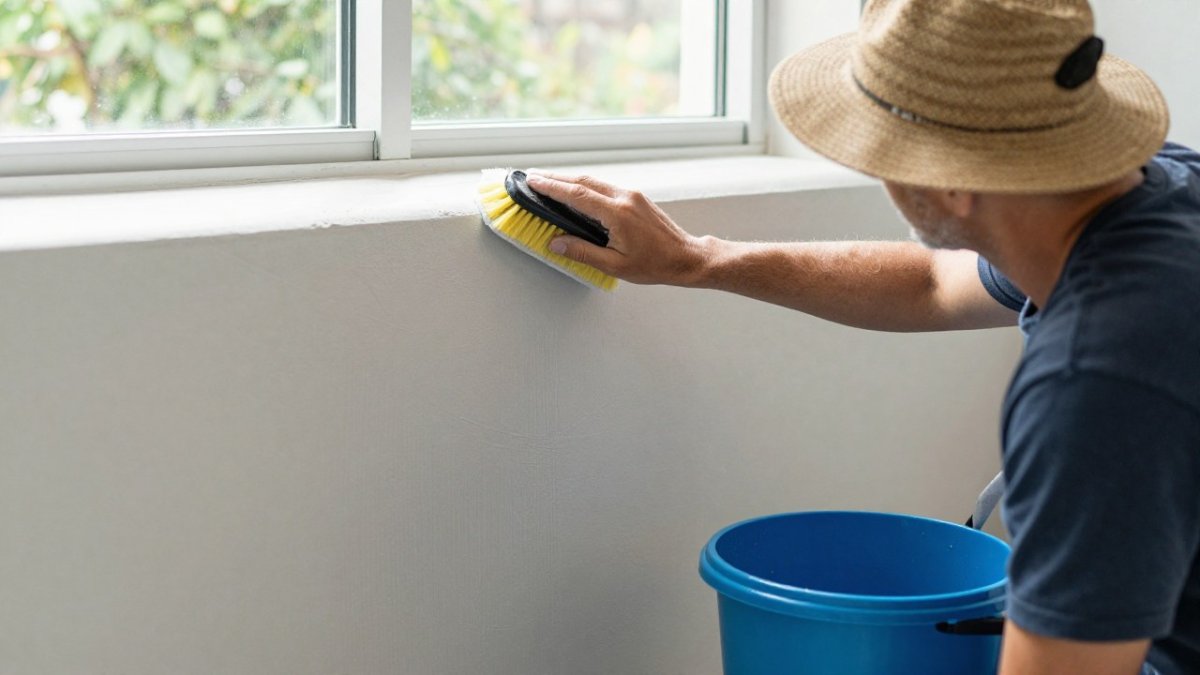
Skip scrubbing pads, steel wool, and abrasive powders. These scratch the surface and leave small grooves where dirt collects.
Pay attention to the waterline. Body oils, sunscreen, and lotion create a ring that can stain the vinyl over time. Clean this area often so the ring never gets a chance to set.
Step 3: Clean the Liner With Water in the Pool
Cleaning underwater is where most of the real work happens. Use a soft brush on the walls and floor to loosen algae and debris before they settle into the vinyl.
Run the filter long enough each day to circulate the full volume of water.
A common mistake is brushing too hard. Vinyl is durable but it is not indestructible. Use gentle, sweeping strokes and let the chemicals and filtration do most of the work.
Step 4: Choose the Best Vinyl Pool Liner Cleaner and Safe Tools
Not every pool cleaner is safe for vinyl. Look for products labeled specifically for vinyl liners, and avoid harsh solvents, bleach concentrates, and anything with strong degreasers unless the label says it is safe for vinyl.
Safe tools include:
- Soft-bristled pool brushes with nylon or poly bristles
- Microfiber or soft cloths for the waterline and above-water sections
- A vacuum head with a soft bristle or rubber edge
Avoid wire brushes, abrasive pads, and pressure washers set too close to the surface. Each of these can cut or scuff the liner.
When comparing cleaners, check whether the label names vinyl specifically, lists the active ingredients, and gives clear dilution directions.
Step 5: Treat Stains and Troubleshoot Common Problems
Stains are easier to remove when they are small, but the wrong product can set a stain permanently or damage the vinyl. The key is to identify the stain type before you treat it, then work from the gentlest method to the strongest.
Identify the stain before you treat it
Start with a simple test. Hold a chlorine tablet against the stain for about 30 seconds in an inconspicuous spot, then rinse. If the stain lightens, it is organic. If it does not change, it is likely metal or chemical. A second check: rub a small area with a vitamin C tablet; if the stain lifts, it is metal (iron or copper).
- Organic stains (leaves, algae, berries, sunscreen residue): These are the most common. Raise the free chlorine to the high end of the normal range, brush gently with a soft nylon brush, and let the filter run. For a set stain, use a vinyl-safe algaecide or a diluted vinyl cleaner, apply it to a small area first, and rinse thoroughly. Do not pour chlorine directly onto the liner.
- Metal stains (iron, copper, manganese): These appear as brown, rust, or blue-green patches and often show up after fill water with high iron content. Use a metal sequestering product at the label’s recommended dose, keep pH in the 7.2 to 7.6 range, and run the pump continuously for 24 to 48 hours. Do not shock the pool until the stain is gone, because high chlorine can set metal stains.
- Oil and lotion rings: These form at the waterline from body oils and sunscreen. Wipe with a mild vinyl cleaner above the waterline and rinse well. A tennis ball tossed in the pool is a common low-cost trick for absorbing surface oils before they reach the liner.
- Scale and calcium deposits: White, crusty patches usually mean high calcium hardness or high pH. Lower pH to the low end of range, brush with a soft brush, and use a vinyl-safe scale remover only if the label names vinyl.
- Chemical stains and bleaching: Pale or white blotches often come from chlorine tablets or granular shock sitting on the liner. Prevent them by pre-dissolving granular products in a bucket of pool water and broadcasting them over the deep end while the pump runs. Never drop tablets into the skimmer or let them rest on the liner.
Work from gentle to strong
Treat any stain in this order: brush first, then a vinyl-safe cleaner, then a targeted product for the identified stain type.
Watch out: never mix chlorine with other cleaning products, and never mix acid and chlorine, some combinations release dangerous fumes. Add one product at a time, run the pump, and retest before adding another.
Stains respond best when you identify the type first and then choose the matching treatment, as summarised below.
| Stain type | Cause | Treatment |
|---|---|---|
| Organic (leaves, algae, berries) | Debris and algae growth | Raise free chlorine, brush gently, run filter |
| Metal (iron, copper, manganese) | High iron in fill water | Metal sequestering product, run pump 24-48 hours |
| Oil and lotion rings | Body oils and sunscreen | Mild vinyl cleaner above waterline, rinse well |
| Scale and calcium deposits | High calcium hardness or high pH | Lower pH, brush, vinyl-safe scale remover |
| Chemical bleaching | Tablets or granular shock resting on liner | Pre-dissolve granular products, never drop tablets on liner |
Seasonal Maintenance Schedule and How Long Your Liner Lasts
Good maintenance follows the seasons, and a simple month-by-month routine keeps the liner protected year-round. See how professional maintenance protects your pool investment over time. The schedule below assumes a typical four-season climate; adjust the timing to your local weather, but keep the sequence.
Month-by-month liner care
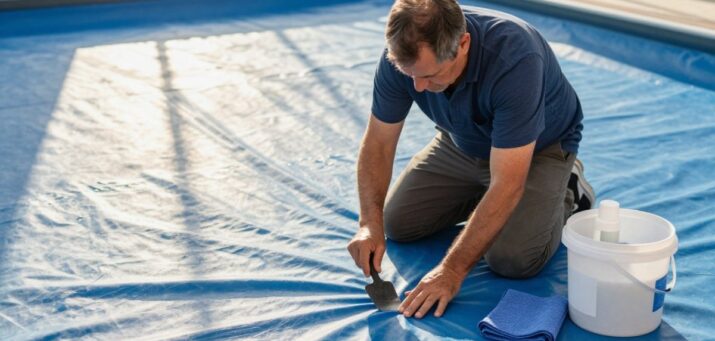
- March-April (opening): Remove the cover, clean it, and inspect the liner for winter damage before refilling. Look for tears, wrinkles, and separation at the seams and fittings. Balance the water first, then shock. Do not drain the pool to clean it, vinyl liners can shrink or shift when the water is removed, and most manufacturers warn against a full drain.
- May: Test water twice a week as the swim season starts. Clean the waterline weekly. Check that the pump runs long enough to turn over the full volume of water each day.
- June-July: Peak swim season means more sunscreen, sweat, and debris. Test water two to three times a week, brush walls and floor weekly, and vacuum as needed. Clean the waterline every week.
- August: Watch for algae in corners and along steps as water temperatures peak. Keep pH and alkalinity in range and run the filter consistently.
- September: Continue testing and cleaning. Inspect the liner for fading, stiffness, or small tears before the season ends.
- October-November (closing): Clean thoroughly, balance the water, and lower the water level only as your manual recommends, usually below the skimmer but never fully drained. Add winter chemicals per the label, blow out the lines, and cover the pool. Inspect the liner one last time and note any damage to address in spring.
- December-February: Check the cover and water level monthly. Remove standing water from the cover so it does not stretch or pull on the liner.
How long a vinyl liner lasts, and when to repair versus replace
With steady care, a vinyl liner can last for many years. Sun exposure, water chemistry, and how well the pool is cleaned all affect that range. The decision to repair or replace comes down to the type and number of problems:
- Repair small, isolated issues: a single tear under a few inches, a loose seam, or a fitting gasket. Patch kits are widely available and work best on clean, dry vinyl.
- Plan for replacement when you see widespread wrinkles that will not smooth out, a liner that has become stiff or brittle, fading across large areas, multiple tears in different spots, or repeated leaks at seams. These are signs the vinyl itself is failing, not just damaged in one place.
Track your readings and tasks in a simple log. Use this pool maintenance checklist for homeowners to plan each month’s tasks. Patterns become easy to spot, and you can catch problems before they become expensive.
Book Professional Liner Care With All About Pools & Spas
If you would rather not handle the weekly routine yourself, our team can take care of it. You can explore our vinyl inground pool services to see what we handle for vinyl liners, and check what a professional pool cleaning service booking costs before you reach out.
Protecting your liner comes down to consistent habits. Balance the water, clean gently, and act early on problems. Get started today with All About Pools & Spas and enjoy your pool for years to come.
Frequently Asked Questions
What is the average lifespan of a vinyl pool liner?
Most vinyl pool liners last roughly 5 to 9 years, depending on water chemistry, sun exposure, and how carefully the pool is maintained. Liners kept at balanced pH and alkalinity, cleaned regularly with a non-abrasive cleaner, and protected from UV damage with proper winter covers tend to reach the upper end of that range. Liners exposed to unbalanced water, sharp objects, or harsh chemicals often need replacement sooner. Keeping a maintenance log helps you spot early wear.
What is the best thing to clean a vinyl pool liner with?
A pH-neutral vinyl liner cleaner, applied with a soft cloth or a soft-bristled brush, is the safest choice for routine cleaning. Avoid abrasive scrubbers, bleach, and strong degreasers, which can dull the surface and cause discoloration. For stubborn marks, a mild solution recommended by the liner manufacturer works well. Always rinse thoroughly and test on a small hidden area first.
How often should you clean a vinyl pool liner?
Brush the liner weekly during the swimming season to prevent algae and scale from bonding to the surface. Clean the waterline as needed, usually every one to two weeks, since oils, lotions, and debris collect there first. Perform a deeper cleaning at the start and end of the season. Regular light cleaning is far easier than removing buildup later.
Can you pressure wash a vinyl pool liner?
Pressure washing a vinyl pool liner is not recommended. High-pressure spray can tear seams, lift the surface, and weaken the vinyl over time. A low-pressure garden hose with a soft brush, combined with the right cleaner, is a safer method for keeping the liner clean.
