

Last Updated: November 5, 2026
Quick Summary
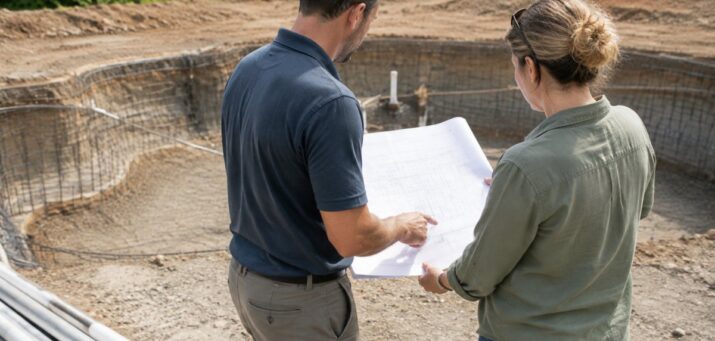
Most pool construction delays are predictable, so you can avoid them by planning before digging. Map a phase-by-phase timeline with duration ranges and weather buffers, clear permits and inspections, lock in design decisions and material orders early, and use a contract that covers delay notice and change orders.
- Ask your contractor for duration ranges for each phase instead of a single finish date.
- Plan schedule buffers before shell construction and before finish work to absorb weather delays.
- Confirm permits are approved and inspection dates are scheduled before excavation begins.
- Finalize pool size, shape, depth, and equipment locations before any work starts.
- Put delay notices in writing and get schedule impacts documented in every change order.
Table of Contents
- Why Pool Construction Delays Happen
- Map Out a Realistic Pool Construction Timeline
- Clear Permits and Inspections Before Excavation
- Lock Down Design Decisions and Material Orders Early
- Build Contract Terms That Protect Your Schedule
- Complete Your Pool Installation Preparation Checklist
- Booking Your Project Start With All About Pools & Spas
- Frequently Asked Questions
Backyard pool projects often run longer than homeowners expect, and schedule is a common concern. A pool that should take a few weeks can stretch into months. The good news is that most of these delays are predictable, and many can be prevented before the first shovel hits the ground. This guide walks through how to avoid pool construction delays, step by step, starting with the planning work that happens before digging. The same early planning that keeps a pool project on schedule can also help with avoiding construction delays during a home remodel.
Why Pool Construction Delays Happen
Pool projects rarely stall for one dramatic reason. More often, a handful of small, foreseeable problems stack up. Understanding the usual causes is the first step to avoiding them.
Weather, Rain, and Site Drying
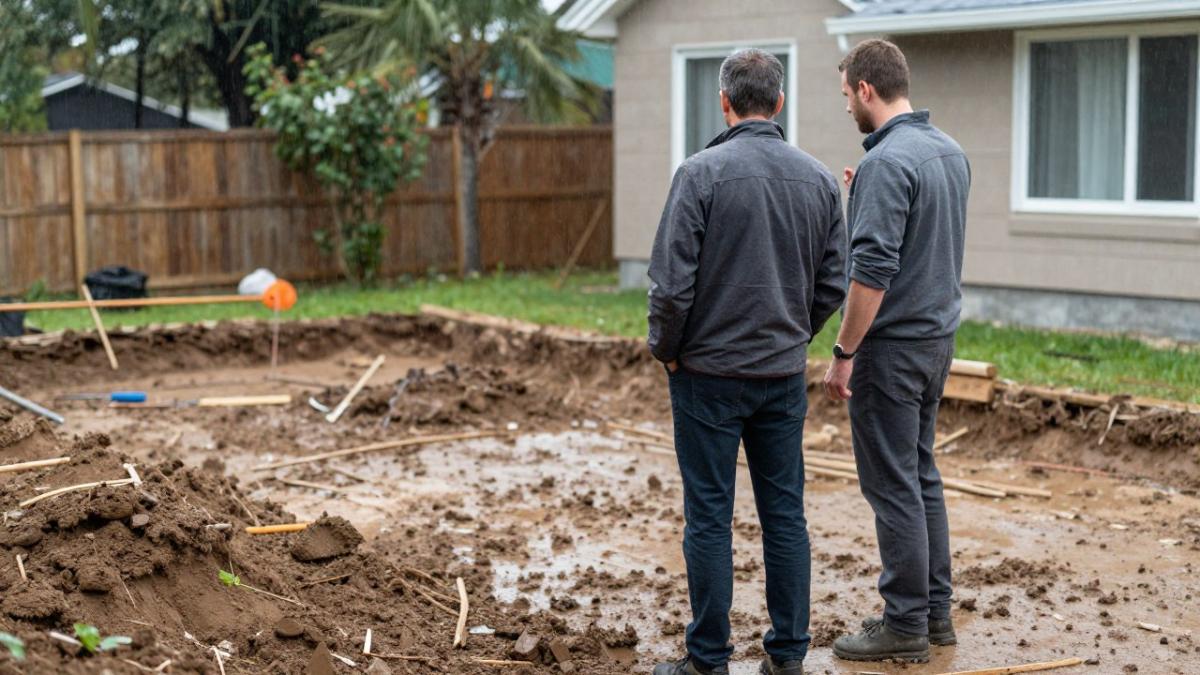
Rain is the most frequent cause of delay. Wet soil cannot be excavated safely, and crews often have to wait for the site to dry before they can move equipment in. Heavy rain can also leave standing water in the hole, which adds pumping time and can soften the base.
Extreme heat and high winds cause their own problems. Concrete and gunite work depends on temperature, and many crews pause work during severe conditions. Plan for weather windows instead of assuming a steady pace.
Soil, Drainage, and Groundwater Surprises
Soil conditions are often the hidden variable. Clay soil holds water and drains slowly. Sandy soil can collapse during excavation. Groundwater can rise unexpectedly, forcing the crew to stop and manage water before continuing.
These issues rarely show up on a surface inspection. A site evaluation that includes drainage and soil testing reveals far more than a walk-through. When a problem surfaces mid-build, the fix usually adds days, not hours.
Map Out a Realistic Pool Construction Timeline
A written timeline is the single best tool for keeping a project on track. Without one, it is hard to tell whether a delay is normal or a warning sign. The stronger version of that tool is a phase-by-phase schedule with duration ranges, dependencies, and explicit weather buffers, not a single promised finish date.
A typical residential build moves through these phases, and each one depends on the one before it:
- Design and approvals: Final drawings, engineering, HOA review if applicable, and permit submittal. This is often the longest pre-construction phase because it sits outside the contractor’s control. Expect weeks, not days, and treat any promised “quick approval” as a question to verify.
- Excavation and site prep: Digging, drainage, and utility access. This phase is the most weather-sensitive. Wet soil cannot be excavated safely, and crews often have to wait for the site to dry before equipment can move in.
- Steel and plumbing: Rebar, plumbing trenches, and equipment pads. This work depends on a stable, dry excavation and on plumbing materials being on site.
- Shell construction: Gunite, vinyl liner setup, or fiberglass set. Gunite and concrete work depend on temperature, and crews commonly pause during extreme heat, high winds, or freezing conditions.
- Tile, coping, and decking: Finish work that depends on curing time and on finish materials arriving before crews are scheduled.
- Equipment, startup, and inspection: Final hookups and approvals. This phase depends on equipment delivery and on inspection scheduling.
Ask your contractor for duration ranges for each phase, not a single date. Ranges account for weather and inspection timing. A realistic plan shows where schedule buffers sit, typically before shell construction and before finish work, so a rainy week does not push the finish date back by a month.
Dependencies matter as much as durations. Steel cannot start until excavation is dry and inspected. Gunite cannot start until steel and plumbing pass inspection. Decking cannot start until the shell has cured. When you review the schedule, trace those links: if one phase slips, every downstream phase moves with it unless a buffer absorbs the slip.
Review the timeline together every week or two. Ask what changed and what is coming next. Regular check-ins catch slippage early, while it is still a scheduling problem rather than a rework problem.
Watch out: a schedule that shows every phase back-to-back with no buffer is a plan that assumes perfect weather and perfect inspections, the two things most likely to slip.
Clear Permits and Inspections Before Excavation
Permits are a common source of avoidable delay. Most local jurisdictions require approval before any digging begins, and inspections must be scheduled at specific build stages. If a required inspection is missed or a plan is not approved, work stops.
Before excavation starts, confirm:
- The permit application has been submitted and approved
- Inspection stages are listed on the schedule
- Property lines, setbacks, and easements are verified
- Utility locates are complete
Ask your contractor who handles permit applications and how inspection scheduling works. Clear answers now prevent surprise stops later.
Lock Down Design Decisions and Material Orders Early
Late design changes are one of the most expensive ways to lose time. Once excavation begins, a change in pool shape, depth, or equipment placement can mean re-digging, re-plumbing, or waiting for new materials.
Make these decisions before any work starts:
- Final pool size, shape, and depth
- Equipment locations, including pumps, filters, and heaters
- Tile, coping, and decking selections
- Fencing, lighting, and any outdoor features that touch the pool area
Order long-lead materials as early as possible. Custom tile, specialty equipment, and some plumbing parts can take weeks to arrive. Ask your contractor for a materials list with expected delivery dates, then confirm each order.
Build Contract Terms That Protect Your Schedule
A strong contract sets clear expectations about timing. It should spell out the start date, the expected completion window, and what happens when delays occur. Most competitors stop at that sentence; the useful part is knowing which clauses to read closely and how to use them when the schedule slips.
Look for these terms in your agreement:
- A specific start date and an estimated completion window, with the window expressed as a range rather than a single date
- A written process for approving change orders, including who signs and how the schedule is adjusted
- Clear notice requirements when a delay is expected, who notifies whom, in writing, and within how many days
- Responsibility for weather-related and permit-related delays
- Regular progress updates and a named point of contact
Pay attention to the difference between excusable and preventable delays. Weather and inspection backlogs are usually excusable. Late material orders and slow decisions on the homeowner’s side are often preventable. A fair contract should name both categories so neither party is left guessing, and it should say what happens to the schedule in each case.
Notice requirements are the clause most homeowners skip. If the contract requires written notice of a delay within a set number of days, a verbal heads-up at the fence line does not satisfy it. Put delay conversations in writing, email is usually enough, and keep a simple log of dates, what was reported, and what was promised. That log becomes the record if the schedule is disputed later.
Change orders deserve the same attention. A change order should state the added cost, the added time, and the new downstream dates. An approval that adds cost but not time is a red flag; an approval that adds time but not cost is worth reading twice. Either way, get the schedule impact in writing before work resumes.
Escalation is the last piece. A practical contract names a sequence: raise the issue with the project manager, then the owner, then a written demand, and only then a formal dispute process. You do not need to threaten any of it, you need to know the sequence exists so a stalled project has a next step other than waiting.
Watch out: a contract that promises a guaranteed completion date without a weather allowance or a change-order process is often the one most likely to end in a dispute, because the first rainy week puts the contractor in breach of a promise no one could keep.
Complete Your Pool Installation Preparation Checklist
Before excavation, use this checklist to confirm the project is ready to move:
- Final design approved in writing
- Permits submitted, approved, and inspection dates set
- Utility locates completed
- Soil and drainage evaluation reviewed
- Equipment and materials ordered, with delivery dates confirmed
- Access route for trucks and equipment cleared
- Contract, timeline, and change order process signed off
- Contact person and check-in schedule agreed upon
Access is easy to overlook. Trucks, excavators, and material deliveries need a clear route to the backyard. Trim branches, move fences or planters if needed, and tell neighbors about the work schedule.
Watch out: approving a design change after excavation begins almost always adds time, because the crew may have to undo finished work before starting again.
Booking Your Project Start With All About Pools & Spas
When you are ready to plan your build, the next step is a consultation. All About Pools & Spas can walk through your site and help you plan before any digging begins. Reach out through our website to request a project start, and our team can provide current pricing and a quote for your property. You can also review the Pool Spa Installation Service page to see what the installation covers.
Frequently Asked Questions
How long does it take to build an inground pool?
Most residential inground pool projects take several weeks to a few months from excavation to a finished, usable pool, depending on the pool type, design complexity, and site conditions. Gunite pools often take longer than vinyl-liner pools because of curing and finishing steps. Permit approval, inspections, and material availability can add time before digging begins. Ask your contractor for a phase-by-phase schedule with realistic duration ranges so you can see where the project is likely to slow down.
How do weather and rain affect pool construction?
Rain can halt excavation, saturate soil, and leave standing water in the pit, which often requires pumping and drying before work resumes. Extreme heat can complicate concrete and gunite work, while high winds can delay crane or delivery operations. Construction schedules usually include some weather allowance, but heavy or prolonged rain can still push completion dates. Discuss weather contingencies with your contractor before the project starts.
How can I keep a pool project on schedule?
Finalize your design, equipment selections, and permit documents before excavation begins, since late changes are a common source of delay. Confirm material and equipment delivery dates in writing, and schedule regular check-ins with your contractor to review progress against the timeline. Keep a simple log of decisions and approvals so that any slowdown can be traced to its cause. Prompt responses from you during the project help prevent avoidable waiting.
What should I do if my pool construction is delayed?
Start by asking your contractor for the cause of the delay in writing, along with a revised schedule and recovery plan. Determine whether the delay is excusable, such as severe weather, or preventable, such as a late homeowner decision or missing paperwork. Review your contract for delay provisions, notice requirements, and any remedies it provides. Keep records of all communications, and address concerns promptly so the revised schedule stays realistic.
Ready to get started? Contact All About Pools & Spas to request your project start and build a schedule you can count on.
