

Quick Summary
Energy efficient pool upgrades that pay off most quickly are variable-speed pumps run on a tuned schedule, followed by a solar cover that cuts heat loss. Pumps run for hours daily, so small efficiency gains add up on the monthly bill. Payback depends on your run hours, electricity rate, and how long you keep the pool.
- Variable-speed pumps use far less power than single-speed pumps when run on a schedule.
- Running a low speed for eight to twelve hours is a common starting point for routine filtration.
- Payback equals upgrade cost divided by annual energy savings.
- A solar cover reduces evaporation and keeps water warm, lessening heater run time.
- Replace the heater last, after pump and cover upgrades, so it can be sized accurately.
Table of Contents
- Why Upgrade Pool Equipment for Energy Savings
- Step-by-Step Upgrade Audit: Where Your Pool Loses Energy
- Are Energy-Efficient Pool Pumps Worth It?
- Most Energy-Efficient Pool Pump Options Compared
- Pairing an Energy-Efficient Pump and Filter
- Heating, Lighting, and Solar Covers: Upgrade Sequencing
- Most Energy-Efficient Pool Equipment Upgrades to Prioritize
- Booking Your Equipment Upgrade Consultation
- Frequently Asked Questions
Last Updated: November 8, 2026
Energy efficient pool equipment upgrades can cut a pool’s operating costs for years, and the payoff is often faster than homeowners expect. Pool pumps and heaters run for hours every day, so small efficiency gains add up on the monthly bill. This guide covers where pools lose energy, which upgrades deliver the best return, and how to sequence them.
Why Upgrade Pool Equipment for Energy Savings
Older pool equipment often runs at a single fixed speed, pushing water through the system far longer than needed. The motor draws full power the whole time, even when the pool only needs filtering for a few hours. Modern equipment adjusts its output to the actual demand, which reduces electricity use without sacrificing water quality.
Upgrades also improve how the pool performs day to day. Quieter operation, more consistent filtration, and better control over heating are common benefits. For homeowners with aging systems, replacing one worn component often reveals inefficiencies elsewhere in the setup.
Step-by-Step Upgrade Audit: Where Your Pool Loses Energy
Before buying anything, audit the system you already have. Work through these steps in order:
- Note the pump’s rated horsepower and speed type. Single-speed pumps are the usual starting point for savings.
- Record how many hours the pump runs per day. Check the timer or controller settings.
- Check the heater type and fuel source. Gas, electric, and heat-pump units have very different running costs.
- Inspect the lighting. Older incandescent fixtures draw far more power than LED replacements.
- Look for heat loss. An uncovered pool loses heat quickly, so the heater works harder.
- Review the filter condition. A clogged filter forces the pump to push harder against resistance.
Document each item with the current wattage or fuel use where you can find it on labels or your utility bills. That baseline makes the savings math in later sections far more reliable.
Are Energy-Efficient Pool Pumps Worth It?
For most residential pools, yes, but “worth it” is a math question, not a product question. The pump is usually the largest single electricity consumer in the pool system, so it offers the biggest opportunity. Whether the upgrade pays off depends on your run hours, your electricity rate, the age and speed type of your current pump, and how many years you plan to keep the pool. Homeowners who run pumps long hours in hot months tend to see the fastest return.
Variable-Speed Pumps and Pump Schedules
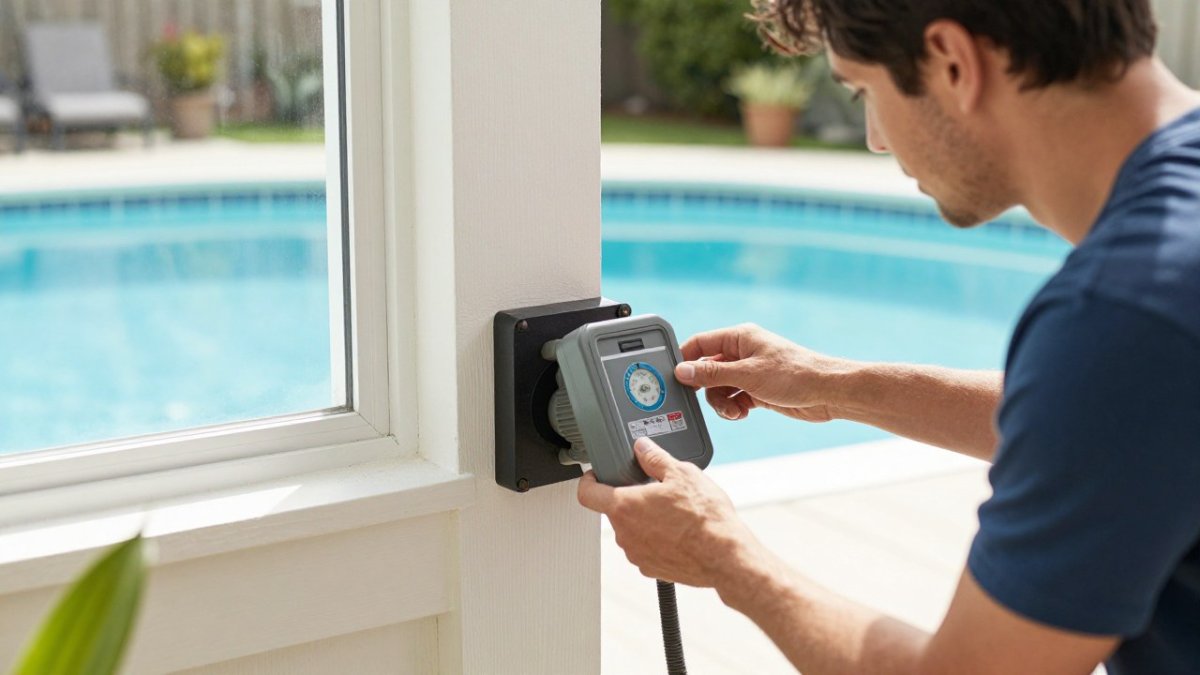
A variable-speed pump lets you set different speeds for different tasks. A low speed can handle routine circulation and filtering, while a higher speed can be used briefly for vacuuming, backwashing, or running a water feature.
Keep the schedule simple. Running the pump long enough to turn over the water once or twice daily is a common starting point, and you can adjust based on water clarity and bather load. A low-speed run of eight to twelve hours is a common starting point for routine filtration, with brief higher-speed runs as needed.
Watch out: a variable-speed pump set to run at high speed all day erases most of the savings. The schedule, not just the motor, is what delivers the return.
Calculating Payback Period With Transparent Assumptions
A payback period estimates how many years of energy savings it takes to cover the upgrade cost. The basic formula is:
Payback (years) = Upgrade cost ÷ Annual energy savings
Annual savings depend on your pump’s old and new power draw, daily run hours, and your electricity rate in dollars per kilowatt-hour. The formula is only as good as the assumptions you feed it, so write them down and rerun the numbers with your own figures.
Here is a worked example using round, clearly stated assumptions, not a quote for your pool:
- Old single-speed pump drawing about 1,500 watts, run 8 hours per day, 180 days per season.
- New variable-speed pump averaging about 400 watts over a comparable schedule.
- Electricity rate of $0.15 per kWh.
- Old annual pump energy: 1,500 W × 8 h × 180 days ÷ 1,000 = 2,160 kWh, or about $324 per year.
- New annual pump energy: 400 W × 8 h × 180 days ÷ 1,000 = 576 kWh, or about $86 per year.
- Annual savings: about $238.
- If the installed upgrade costs $1,200, payback is roughly five years.
Change any assumption and the answer moves. A higher rate, longer season, or larger gap between old and new wattage shortens payback; a short season or cheap electricity lengthens it. Costs vary by model, dealer, and installation, so request a current quote from All About Pools & Spas for your specific equipment and plug your own numbers into the formula.
Compatibility and Sizing Checks Before You Buy
An efficient pump that is oversized for the pool, or mismatched to the filter and plumbing, can waste energy even when the motor itself is efficient. Before committing, confirm the pump’s flow rate suits your pool volume and turnover goal, that the filter is rated for that flow, and that the plumbing and electrical supply meet the manufacturer’s requirements. A professional sizing review is worth the cost when the existing system is old or has been added to piecemeal.
Most Energy-Efficient Pool Pump Options Compared
The main choices are single-speed, two-speed, and variable-speed pumps. Single-speed pumps are the least expensive to buy but use the most energy. Two-speed pumps offer a low and high setting and sit in the middle. Variable-speed pumps give the finest control and typically deliver the lowest running costs.
| Pump Type | Relative Energy Use | Best For |
|---|---|---|
| Single-speed | Highest | Tight budgets, small pools |
| Two-speed | Moderate | Mid-range savings |
| Variable-speed | Lowest | Long run hours, maximum savings |
Confirm that any pump you consider matches your pool size and plumbing. An oversized pump can waste energy even when it is efficient.
Pairing an Energy-Efficient Pump and Filter
A new pump performs best when the filter is sized and maintained correctly. Filter media that is clogged or undersized creates resistance, forcing the pump to work harder. Matching the pump’s flow rate to the filter’s rated capacity keeps water moving smoothly.
Clean or replace filter media on schedule. Many homeowners find that a well-matched pump and filter combination runs quieter and needs fewer backwashes, which further reduces energy and water use.
Heating, Lighting, and Solar Covers: Upgrade Sequencing
Sequence matters because each upgrade changes the load on the next. Start with the pump, because its savings apply every day of the year and its flow rate sets the baseline for everything downstream. Next, address heat loss. A solar cover reduces evaporation and keeps water warm overnight, which lessens how often the heater runs. Covers are typically inexpensive relative to heating costs and deliver quick returns. Replace lighting when convenient, since LED fixtures cut lighting power substantially. Upgrade the heater last, after the pump and cover are in place, so you can size the new heater accurately for the lower heat demand.
Why Heaters Come Last
A heater sized for a pool that still loses heat through an open surface will be larger and more expensive than one sized for a covered pool. Doing the cover first lowers the heat load, which can let you choose a smaller heater and run it less. The same logic applies to the pump: a heater’s flow requirements must match what the pump delivers, so confirm the two are compatible before buying either.
Climate and Pool-Use Trade-Offs
Recommendations shift with climate, season, and how you use the pool. In hot climates with long swim seasons, the pump schedule and cover do most of the work, and heating may be a minor cost. In cooler climates or for pools used mainly in shoulder seasons, heating dominates the bill and a heat pump or solar heating system deserves more attention. Homes that heat the pool only for weekends may do better with a cover and a timer than with a larger heater. Match the upgrade to your actual use pattern rather than to a generic checklist.
Lighting and Controls as Part of the Sequence
LED lighting is a straightforward swap that cuts lighting power and often lasts longer than incandescent or halogen fixtures. Pair lighting and heater upgrades with controls so schedules are enforced automatically. Timers and automation let you run the pump at low speed, turn the heater on only when needed, and switch lighting on a schedule, practical savings that go beyond replacing equipment.
Watch out: adding a heater or automation to an older electrical panel without checking capacity can create a safety and code problem. Have a licensed professional review the electrical supply before installation.
Most Energy-Efficient Pool Equipment Upgrades to Prioritize
Use this priority list to decide what to tackle first:
- Variable-speed pump with a tuned run schedule
- Solar or thermal pool cover
- LED pool lighting
- Filter cleaning or replacement
- Heater replacement or upgrade, sized to the improved system
- Automation and timer controls to enforce schedules
This order targets the highest daily savings first and avoids buying a heater sized for a pool that still loses heat through an open surface.
Booking Your Equipment Upgrade Consultation
Choosing a qualified contractor matters as much as choosing the right equipment. Look for licensing, clear written estimates, and a willingness to explain the energy math. Our guide on How to Choose a Pool Contractor: A 2026 Guide covers the questions worth asking before you commit.
All About Pools & Spas is a licensed swimming pool contractor and has been family owned and operated since 2004. We design, build, service, and renovate pools, and we have a full-product showroom. Start with a pool automation system to control pumps, heaters, and lighting from one place, or compare energy-efficient variable-speed pool pumps and pump options from Hayward before you decide. If you are sequencing a heating upgrade, review our heater options first.
Frequently Asked Questions
What are the best upgrades for an inground pool?
For most inground pools, the highest-impact upgrades are a variable-speed pump, an efficient heater or solar heating system, LED pool lights, and a solar cover or pool blanket to reduce heat loss. Start with the pump, because it runs the most hours and drives most of the electricity use. Heating and cover upgrades follow if you heat the pool regularly. Your actual savings depend on your pump run hours, local electricity rates, and how often you heat. Our team can assess your equipment and recommend the sequence that fits your pool and budget.
How much does a pool pump increase your electric bill?
A single-speed pump running around the clock can account for a large share of a household’s pool-related electricity use, and running it longer than needed raises the bill directly. Because pump energy scales with speed and hours, reducing runtime or switching to a variable-speed pump typically has the largest effect on monthly cost. The exact figure depends on pump horsepower, run schedule, and your utility rate. Checking your pump’s rated wattage and hours per day is the simplest way to estimate your own cost.
Are energy-efficient pool pumps worth it?
In many cases, yes, especially when the existing pump is old, oversized, or runs on a fixed schedule. Variable-speed pumps let you run the pool at low speeds for circulation and filtration, which uses far less energy than full speed. Whether the upgrade pays back depends on how many hours the pump runs, your electricity rate, and the upfront cost of the new unit. Pricing varies with the model and installation, so request a quote from All About Pools & Spas for current figures.
Can an energy-efficient pump work with an existing pool filter?
Often it can, but compatibility should be checked before buying. The new pump must match the plumbing size, the filter’s rated flow, and the required head pressure. A pump that moves too much water can strain a filter, while one that moves too little reduces filtration. A professional sizing check, rather than a guess, prevents these problems and helps you keep the filter performing well after the upgrade.
