

Quick Summary
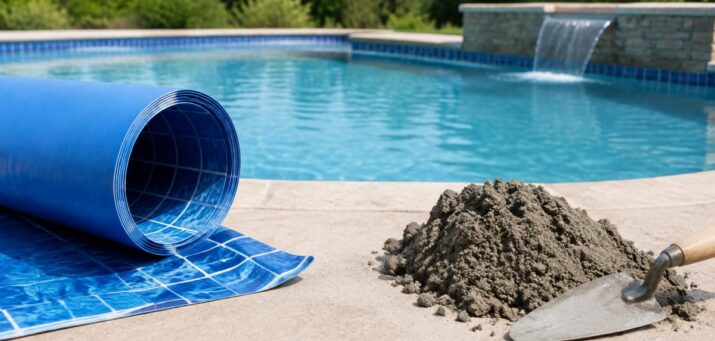
Vinyl vs gunite pool construction is mostly a trade-off between upfront cost and long-term flexibility. Vinyl pools generally cost less and build faster, while gunite pools cost more but allow nearly unlimited custom shapes and do not need liner replacement.
- Vinyl pools generally cost less to install and can be built faster than gunite pools.
- Vinyl liners typically need replacement every 5 to 9 years, depending on water chemistry and sun exposure.
- Gunite pools avoid liner replacement but may need plaster or tile resurfacing over time.
- Gunite is generally the better choice for freeform curves, custom depths, and bench seating.
- Ask contractors for a multi-year cost projection that includes liner or resurfacing intervals.
Table of Contents
- Vinyl vs Gunite Pool Construction at a Glance
- Upfront Installation Cost: Comparing Vinyl and Gunite Pool Prices
- Long-Term Ownership Cost, Including Liner Replacement
- Installation Timeline: How Long Each Pool Takes to Build
- Design Flexibility and Custom Inground Pool Shapes
- Durability, Lifespan, Maintenance, and Site Conditions
- Choosing the Right Pool Type and Evaluating Contractor Bids
- Frequently Asked Questions
Vinyl vs Gunite Pool Construction at a Glance
Choosing between vinyl and gunite is mostly a trade-off between upfront cost and long-term flexibility. Vinyl pools generally cost less to install and can be built faster, while gunite pools generally cost more but offer greater design flexibility. Since 2004, All About Pools & Spas has built both types for homeowners in the Sumter area.
The decision usually comes down to five questions: how much you want to spend now, how much you want to spend over time, how long you can wait for the build, how unusual your design is, and how much maintenance you want to handle. Vinyl wins on the first two questions in most cases. Gunite wins on the last three.
| Factor | Vinyl Liner Pool | Gunite Pool |
|---|---|---|
| Upfront cost | Lower | Higher |
| Build time | Shorter | Longer |
| Shape and size | Limited by panel design | Nearly unlimited |
| Liner replacement | Required periodically | Not required |
| Surface repairs | Patch or replace liner | Resurface shell |
| Best for | Budget-conscious builds, simple shapes | Custom designs, long-term ownership |
Vinyl pros: Lower installation price, faster construction, smooth surface that is comfortable underfoot, and a good fit for simple rectangular or kidney shapes.
Vinyl cons: The liner must be replaced over time, shapes are more constrained, and a puncture or tear requires prompt repair.
Gunite pros: Custom shapes, depths, benches, and features are straightforward, and the concrete shell can last for decades with proper care.
Gunite cons: Higher upfront cost, longer construction timeline, and surface finishes such as plaster or tile need periodic attention.
Upfront Installation Cost: Comparing Vinyl and Gunite Pool Prices
Vinyl pools generally cost less to install than gunite pools of similar size. The gap generally comes from materials and labor: vinyl pools use a prefabricated wall system and a pre-cut liner, while gunite pools require steel reinforcement, sprayed concrete, and more finishing work.
We do not publish pricing for our own work here because costs depend on size, depth, site access, excavation, equipment, and finishes. A quote from All About Pools & Spas will reflect your specific property. Ask any contractor to itemize excavation, wall or shell construction, plumbing, electrical, decking, fencing, and startup chemicals so you can compare bids line by line.
Watch out: Some low bids leave out excavation, permits, or equipment. Confirm the scope before comparing totals.
Long-Term Ownership Cost, Including Liner Replacement
Upfront cost is only part of the picture, and most comparisons stop there. A more useful approach is to build a ten-year ownership model that adds the recurring costs each pool type actually generates. That is the angle most articles skip, and it is the one that changes the vinyl-versus-gunite decision for many households.
Start with the vinyl side. Vinyl liners are a wear item, not a permanent surface. Vinyl liners are generally replaced periodically, so a vinyl owner should plan for liner replacement within a ten-year window, depending on sun exposure, water chemistry, and use. Liner replacement cost generally scales with pool size, shape, and the liner pattern selected, so request a replacement estimate alongside the original build quote rather than assuming the liner lasts forever.
Gunite pools avoid liner replacement, but they are not maintenance-free. The plaster or tile finish wears and eventually needs resurfacing, and the timing depends on water chemistry, finish type, and how aggressively the surface is cleaned. Resurfacing generally arrives later in the ownership period than liner replacement. Tile repair, coping repair, and equipment replacement apply to both pool types and should be budgeted in either model.
A ten-year model should include these line items for each pool type:
- Initial construction price, itemized by excavation, shell or wall system, plumbing, electrical, decking, fencing, and startup chemicals
- Liner replacement cycles for vinyl pools, including the pattern and size variables that move the price
- Surface resurfacing and tile repair for gunite pools, with an expected interval based on finish type
- Routine water chemistry, electricity for circulation and heating, and any professional service plan
- Repair frequency and the expected service life of pumps, filters, heaters, and lighting
- Equipment replacement timing, since pumps and heaters usually fail before the structure does
The mechanism behind the cost gap is straightforward. Vinyl spreads cost across repeated liner replacements, so the owner pays smaller amounts more often. Gunite concentrates cost into a higher build price and a later resurfacing event, so the owner pays more up front and less frequently. Neither pattern is universally cheaper; the answer depends on how long you plan to own the pool and how much you value predictable versus deferred spending.
Watch out: A bid that quotes only the build price may not show the liner or resurfacing cycle. Ask any contractor to show a multi-year cost projection with the replacement and resurfacing intervals stated, not just the construction total.
Installation Timeline: How Long Each Pool Takes to Build
Vinyl pools generally go in faster. Gunite pools generally take longer because the steel reinforcement, sprayed concrete shell, curing time, and finishing work each have to happen in sequence.
Weather, soil conditions, permit approval, and equipment scheduling all affect the timeline. Ask your builder for a written schedule that shows each phase, and confirm how delays will be communicated. Clear updates matter as much as the calendar.
Design Flexibility and Custom Inground Pool Shapes
Gunite is generally the stronger choice when design matters. Our guide to custom residential pool design services explains how freeform curves, depths, and benches are planned. Because the shell is sprayed or formed on site, it can accommodate freeform curves, custom depths, and bench seating.
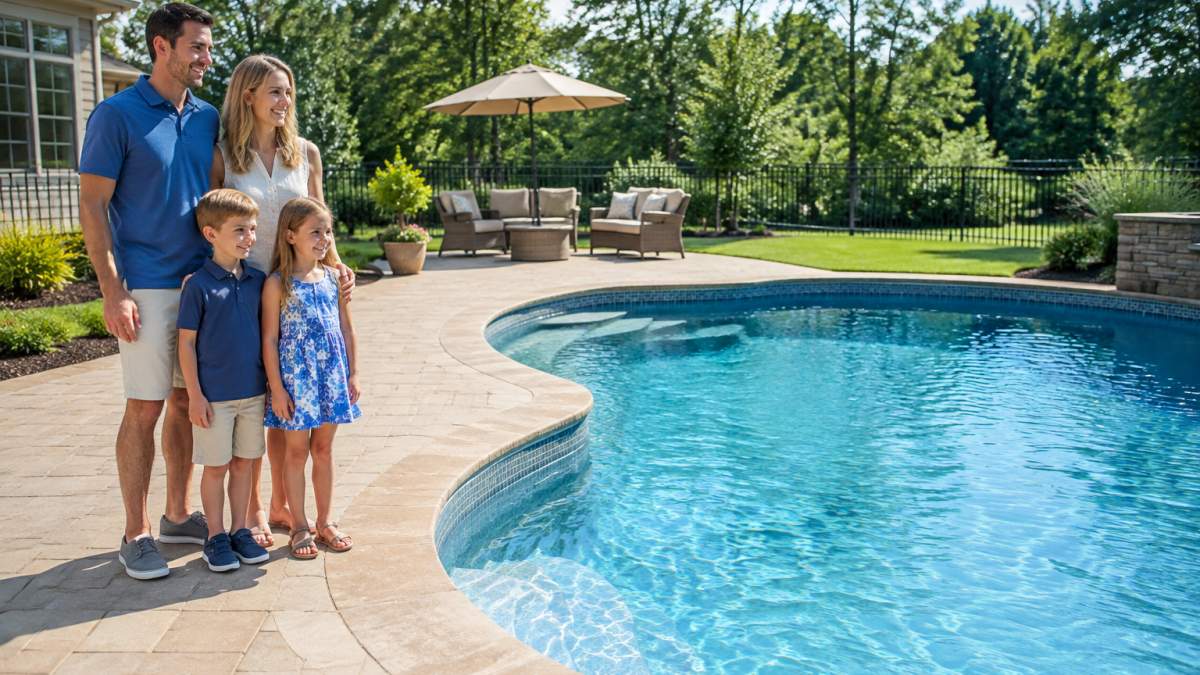
Vinyl pools can still be attractive and functional, but their shapes are generally tied to the wall panels and liner patterns available.
A family wanting a straightforward pool for swimming and summer play may find vinyl meets their needs. A homeowner who wants a landscaped, resort-style backyard feature will usually be better served by gunite.
Durability, Lifespan, Maintenance, and Site Conditions
Gunite shells are generally built to last, and a properly constructed concrete pool can serve a family for many years. Routine maintenance generally includes balancing water chemistry, cleaning the surface, and monitoring the finish. Vinyl pools generally require less surface care day to day but depend on the liner. Our list of vinyl pool liner maintenance steps shows how to catch early wear before it becomes costly damage. Punctures, tears, and UV wear eventually require replacement, and vinyl owners should check the liner regularly for early signs of damage.
Site conditions are where the two construction types can diverge most. The same yard can favor one type over the other depending on soil, water, and climate, so a site assessment should come before a design recommendation.
Expansive or shifting soil is the first check. Clay-heavy soils that swell when wet and shrink when dry put different demands on each structure. A gunite shell is rigid and can be engineered with reinforcement and a properly prepared base to resist movement, but a poorly drained shell can crack. A vinyl pool relies on a wall system and a base that must stay stable, because movement under the liner can show through as wrinkles, seams, or premature liner failure.
Groundwater and drainage are the second check. A high water table affects excavation, dewatering during the build, and long-term buoyancy pressure on an empty pool. Gunite shells can be designed to resist hydrostatic pressure, sometimes with relief valves, while vinyl pools need drainage and a base that will not shift when water rises. Grading and surface drainage around the pool matter for both types, because water that pools against the deck finds its way to the structure.
Freeze-thaw cycles are the third check. In climates where temperatures swing across the freezing point, water expands in cracks and pores and drives surface deterioration. Gunite finishes are more vulnerable to freeze-thaw damage at the plaster and tile layer, and proper winterization protects the shell. Vinyl liners can become brittle in cold and are more prone to cracking if the pool is not winterized correctly. A contractor should explain the winterization steps for each type rather than treating them as identical.
A site assessment should establish, at minimum:
- Soil type, bearing capacity, and whether expansive clay is present
- Depth to groundwater and how the site drains during heavy rain
- Slope and grading around the proposed pool and deck
- Local freeze-thaw exposure and the winterization approach for each type
- Access for excavation equipment and spoil removal
- Utility locations and any setback or permit constraints
Maintenance time also differs. Vinyl pools are generally simpler to clean, while gunite pools generally require attention to the surface finish and periodic inspection of equipment. Many owners choose a professional maintenance program to keep either type running efficiently.
Watch out: A quote that skips the site assessment can hide costly excavation, dewatering, or base preparation work that appears later as a change order. Ask what the bid assumes about soil, groundwater, and drainage before you compare totals.
Choosing the Right Pool Type and Evaluating Contractor Bids
Start by matching the pool type to your priorities. Choose vinyl if your budget is the main constraint, your design is simple, and you accept periodic liner replacement. Choose gunite if you want a custom shape, a longer-lasting structure, and more control over finishes.
When comparing contractor bids, check that each proposal lists:
- A written scope of work covering excavation, construction, plumbing, electrical, and finishes
- Permits and inspections
- Warranty terms, including what they cover and what they exclude
- Expected timeline and payment schedule
- Maintenance options and expected ongoing costs
Ask for references and verify licensing. Our guide on finding a reliable custom pool builder covers what to check before you commit. All About Pools & Spas is a licensed swimming pool contractor, holds Certified Pool Operator certification through the National Swimming Pool Foundation, and is a member of the Association of Pool & Spa Professionals. A customer review from Jimmy Foisey describes the company as “Best pool place in the state.”
Whichever type you choose, the right contractor matters more than the material. Contact All About Pools & Spas to compare vinyl and gunite options for your yard, property, and budget.
Frequently Asked Questions
Is a gunite pool better than vinyl?
Neither type is better in every situation. Gunite pools offer more design freedom, a rigid concrete shell, and a surface that can be refinished, which suits homeowners who want custom shapes, steps, or benches and plan to stay put for many years. Vinyl pools cost less to install and build faster, which suits budget-focused buyers and smaller, simpler designs. The right choice depends on your budget, the shape you want, your site conditions, and how long you expect to own the pool. Compare itemized bids from licensed contractors before deciding.
What are the downsides of vinyl pools?
The main downside of a vinyl pool is the liner. It can tear, puncture, or fade, and it must eventually be replaced. Vinyl pools also offer fewer custom shape and finish options than gunite, and the wall panels can be affected by soil pressure or groundwater if the site is not prepared correctly. Owners should ask contractors how the liner, the wall system, and the warranty are handled, and what the warranty excludes, before signing a contract.
How often does a vinyl pool liner need to be replaced?
A vinyl liner’s lifespan varies with water chemistry, sun exposure, cleaning habits, and the quality of the liner. Budget for replacement as part of long-term ownership. Ask your contractor for the liner warranty terms and the expected replacement cost, since the liner is a recurring expense that gunite pools generally avoid with a plaster or finish resurfacing schedule instead.
Can vinyl and gunite pools be built in custom shapes?
Gunite pools can be built in most custom shapes, including freeform designs, curves, attached spas, and integrated steps or benches, because the concrete shell is formed on site. Vinyl pools are more limited: they use prefabricated wall panels and a pre-made liner, so shape and depth options are narrower. If a specific shape is central to your design, ask contractors to confirm in writing which shapes they can build in each pool type.
