

Last Updated: November 4, 2026
Quick Summary
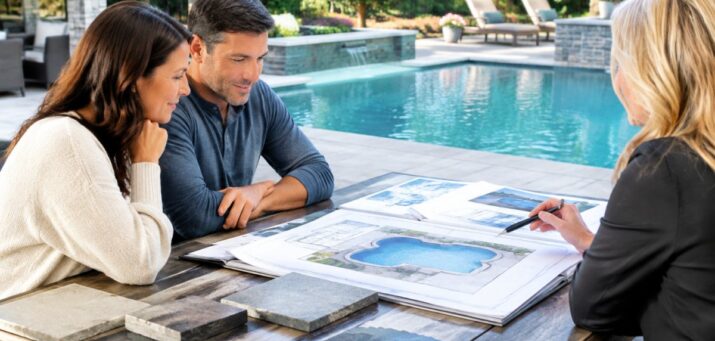
Custom residential pool design services turn your yard, budget, and lifestyle into buildable construction drawings, moving from consultation and site visit through concept layout, material selection, construction drawings, and permit submission. A complete set of plans settles where the pool sits, how it gets built, and what it costs to run.
- Gunite offers any shape and depth, vinyl liner costs less upfront, and fiberglass installs fastest.
- Sloped ground, heavy tree cover, and tight equipment access push the decision toward gunite.
- Separate the design fee from the construction estimate so you can compare designers like-for-like.
- Ask the designer to model annual operating cost, not just equipment price.
- Safety layers like four-sided fencing and anti-entrapment drain covers belong in the drawings.
Table of Contents
- What Custom Residential Pool Design Services Include
- Gunite vs. Vinyl Liner vs. Fiberglass Pools
- Custom Backyard Pool Design Ideas That Match Your Property
- What Custom Residential Pool Design Services Cost
- Site Conditions, Safety, and Local Requirements
- Energy-Efficient and Sustainable Pool Systems
- Questions to Ask a Pool Designer Before You Sign
- Frequently Asked Questions
What Custom Residential Pool Design Services Include
Custom residential pool design services are professional planning services that turn a homeowner’s yard, budget, and lifestyle into buildable construction drawings. The process starts long before anyone breaks ground.
A finished set of plans settles three things: where the pool sits, how it gets built, and what it costs to run. Skip that step and you inherit the problems later, usually at the worst possible moment.
From Site Visit to Final Construction Drawings
The design phase moves through a defined sequence, and each stage narrows the options:
- Consultation. You describe how the household will use the water: young children, lap swimming, entertaining, or therapy.
- Site visit. The designer measures the lot, checks access for equipment, and notes drainage, utilities, and setbacks.
- Concept layout. You get a first look at shape, position, and deck footprint.
- Material selection. Pool type, finish, coping, and decking get chosen together.
- Construction drawings. Final plans show dimensions, depths, plumbing, and equipment placement.
- Permit submission. Drawings go to the local building department for review.
Watch out: homeowners who buy a design online before anyone walks the property often discover the equipment cannot reach the backyard. Narrow side yards and mature trees change everything.
If you want to see what happens after the drawings are approved, our guide on the steps to build a custom gunite pool walks through excavation, plumbing, and finish work in order.
Gunite vs. Vinyl Liner vs. Fiberglass Pools
Gunite is often chosen for design freedom, vinyl for upfront cost, and fiberglass for installation speed.
Gunite is a concrete shell sprayed over a steel rebar frame, then finished with plaster, aggregate, or tile.
Vinyl liner pools use prefabricated wall panels braced against the excavation, with a liner held in place by coping and track.
Fiberglass shells are molded in a factory and set in one piece into a prepared bed. Installation is fast, the surface stays smooth, and the shapes come from a fixed catalog.
| Pool Type | How It Is Built | Design Flexibility | Surface Renewal | Best For |
|---|---|---|---|---|
| Gunite | Steel frame, sprayed concrete, finish | Any shape, depth, or feature | Plaster resurfacing on a cycle | Irregular lots, custom features |
| Vinyl liner | Panel walls, liner in track | Limited to panel shapes | Liner replacement | Tight budgets, simple layouts |
| Fiberglass | Factory shell set in prepared bed | Factory catalog shapes | Gelcoat care | Fast installs, low maintenance |
Which Pool Type Fits Your Yard and Budget
Start with the yard, not the catalog. Sloped ground, heavy tree cover, and tight equipment access push the decision toward gunite, because a concrete shell adapts to conditions a molded one cannot.
Soil and water matter too.
Homeowners planning to stay put for decades usually get more from gunite, because the shell can be resurfaced and the features can be updated without replacing the structure.
Ask any designer to price all three against the same layout. Comparing a fiberglass shell to a gunite pool with a spa is not a comparison at all. Watch out: a quote that lists a pool type without the site work, equipment, and finish assumptions behind it cannot be compared to another quote, so ask for the assumptions in writing.
Custom Backyard Pool Design Ideas That Match Your Property
The best pool designs borrow from the house, not from a magazine. Roof lines, deck materials, and window sightlines should carry into the pool area so the finished space reads as part of the home.
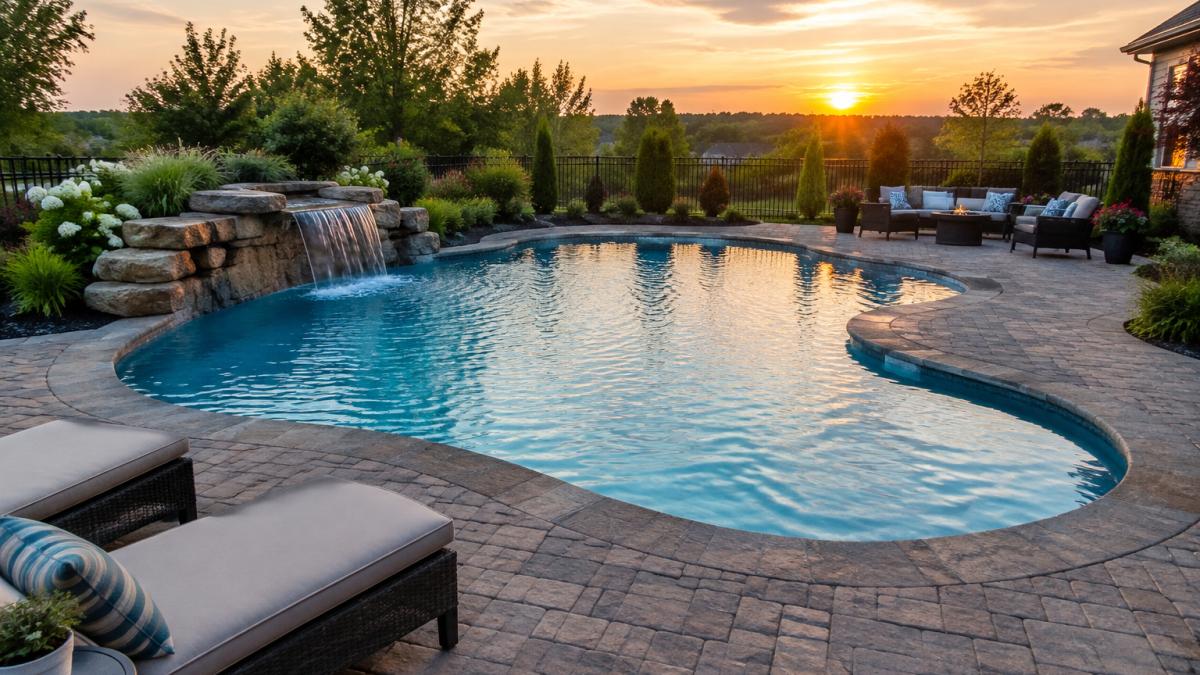
A few directions that hold up well:
- Freeform with natural stone. Curved edges and boulders suit wooded lots and older homes.
- Geometric with clean coping. Straight lines and uniform pavers fit modern architecture.
- Lap pool with a sun shelf. A narrow footprint leaves room for seating and planting.
- Pool and spa combo. A raised spa adds a focal point and warms up cool evenings.
For more directions, browse our collection of backyard pool design ideas and match the shapes to your lot before the first design meeting.
What Custom Residential Pool Design Services Cost
Design fees are commonly quoted in different structures, and the structure matters as much as the number. Ask which structure you are being quoted and what triggers a change to it.
What actually moves the design fee:
- Site complexity. A flat lot with clear equipment access needs less surveying, grading, and structural detailing than a hillside lot that requires a retaining wall and a geotechnical review.
- Engineering requirements. Soils reports, structural stamps, and drainage calculations add professional hours that a simple plan set does not carry.
- Feature count. Tanning ledges, integrated spas, raised walls, water features, and automation each add drawing and coordination time.
- Deck and hardscape scope. Deck square footage and material transitions (pavers, travertine, poured concrete) are drawn and detailed, so they carry design cost.
- Permit and plan-review cycles. Jurisdictions that require multiple review rounds or additional submittals extend the design timeline and the fee.
Separate the design fee from the construction estimate on your contract. Bundling them hides what you are paying for the drawings and makes it hard to compare designers on a like-for-like basis. Some designers credit design fees toward construction only if you build with them, so confirm the credit terms in writing before you sign.
Ongoing Ownership Costs to Plan For
A pool is a recurring expense, not a one-time purchase. The main categories are chemicals, electricity, water, surface renewal, and equipment replacement, and each has a different cadence.
- Electricity. The pump is the largest single energy user in most residential pools. A variable-speed pump running at lower speed for longer periods generally uses less electricity than a single-speed pump running at full speed, because pump power demand rises steeply with speed. The U.S. Department of Energy guidance on pool pumps explains the relationship between pump speed and energy use.
- Chemicals and water. Evaporation drives both water replacement and chemical demand. A cover reduces evaporation, which reduces both bills; the effect is largest in hot, dry, windy conditions.
- Surface renewal. Plaster surfaces are renewed on a cycle, while vinyl liners are replaced and fiberglass gelcoat is maintained. The cadence and cost differ by pool type, so ask the designer for a realistic renewal interval for the finish you choose.
- Equipment replacement. Pumps, filters, heaters, and automation controls have finite service lives. Ask for the expected replacement interval and current replacement cost for each major component so you can budget rather than be surprised.
- Maintenance labor. A professional maintenance program trades a predictable monthly fee for your time; self-maintenance trades your weekends for the fee. Neither is free, so price both before deciding.
Ask the designer to model annual operating cost, not just equipment price. A cheaper pump that runs at full speed every day can cost more over several years than a variable-speed unit, and a heater sized for the pool and climate will run less than an oversized one. For construction figures, see our guide to backyard pool installation cost.
Site Conditions, Safety, and Local Requirements
Local rules drive more design decisions than most homeowners expect. Setbacks, fence height, gate hardware, and anti-entrapment drain covers are set by code, and the building department enforces them at plan review.
Safety planning belongs in the drawings, not in a conversation after the dig:
- Four-sided fencing with a self-closing, self-latching gate
- Anti-entrapment drain covers that meet current standards (Pool and Spa Drain Cover)
- A designated safety ledge or tanning shelf for young swimmers
- Non-slip decking near the water line
The U.S. Consumer Product Safety Commission pool safety information outlines the layers of protection that reduce drowning risk, and those layers should appear on the plan.
Site conditions matter just as much. Poor drainage sends runoff into the pool after storms. Mature trees mean roots, shade, and debris. Utility lines under the proposed shell can force a redesign. A designer who skips the site visit is guessing.
Energy-Efficient and Sustainable Pool Systems
Efficiency comes down to equipment selection and how the pool gets covered. A variable-speed pump, LED lighting, and a properly sized filter cut electricity demand without changing how the pool feels.
Heating choices deserve early attention. Heat pumps and solar or liquid covers are common options for reducing heating costs and evaporation, and automation can help schedule pump operation around actual use.
Ask any designer to model annual operating cost, not just the equipment price.
Questions to Ask a Pool Designer Before You Sign
The right questions separate a designer who plans from one who sells. Ask them before you sign anything, and listen for specifics rather than reassurance.
- Are you licensed as a swimming pool contractor, and can I verify the license number?
- Who draws the construction plans, and are they stamped by an engineer if my lot requires it?
- What is the design fee, and does it apply toward construction if I build with you?
- How do you handle change orders, and what triggers one?
- What is the realistic timeline from signed contract to first swim?
- Can I speak with recent customers whose projects resembled mine?
- How do you communicate progress, and who is my point of contact?
- What happens if we hit rock, groundwater, or an unmarked utility line?
Watch out: a designer who cannot answer the change-order question in plain language will surprise you later. Get the answer in writing.
Our guide on hiring a reliable pool builder expands each question into what a good answer sounds like.
Building a pool is a construction project with permits, engineering, and a crew in your yard, so the design phase is where you protect your budget and your timeline. Get started with All About Pools & Spas and reach our team to turn your backyard into a pool you will use for decades.
Frequently Asked Questions
How much do custom residential pool design services cost?
Design fees vary by project scope, site conditions, and how much detail you want before construction starts. Some builders include design in the construction contract, while others charge separately. Construction itself is typically the larger expense, and pricing depends on materials, complexity, and site conditions. Ask All About Pools & Spas for a written quote that separates design work from construction so you can compare bids accurately.
Which is better for a custom pool: gunite, vinyl liner, or fiberglass?
It depends on your yard and how you plan to use the pool. Gunite allows freeform shapes, custom depths, and built-in features like tanning ledges, which suits irregular lots and detailed designs. Vinyl liner pools cost less upfront and work well for standard shapes, though the liner needs replacing eventually. Fiberglass installs quickly and has a smooth finish, but sizes and shapes are limited to factory molds. A designer can match the material to your property and budget.
What should I ask a pool designer before starting a project?
Ask whether they are licensed and insured, how long they have built pools in your area, and who handles permits. Request a written timeline with milestones and a payment schedule tied to completed work. Ask what happens if weather or material delays push the schedule back, and get references from projects finished in the last year. Confirm whether design revisions are included and how change orders are priced before you sign anything.
Can a custom pool be designed for a small backyard?
Yes. Compact plunge pools, spools, and lap pools fit yards where a full-size pool would overwhelm the space. Designers adjust depth, deck width, and equipment placement to keep walkways clear and meet setback rules. A site visit confirms how much usable space you actually have once utility lines, easements, and required clearances are measured. Bring photos and a rough sketch of how you want to use the yard to the first consultation.
